Thanks so much for stopping by! I hope you'll engage by leaving comments, be encouraged, occasionally chuckle at discovered quirkiness, and even be inspired in faith. Please use the button to subscribe via email so you won't miss a post!
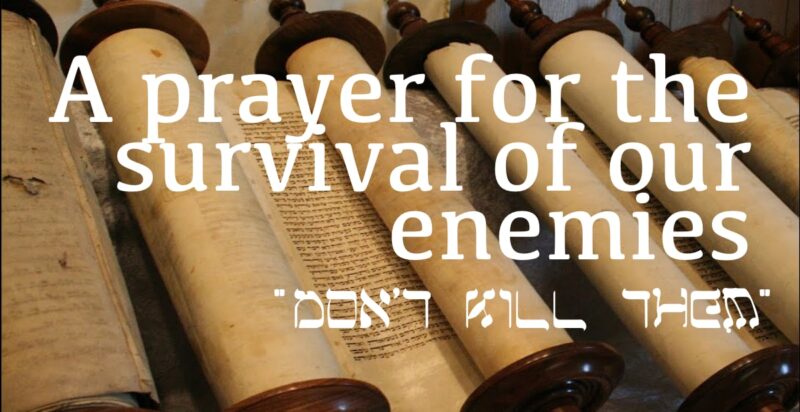
A prayer for the survival of our enemies
We would rather pray for justice. For the deliverance of the innocent and the destruction of the wicked. Yet, David shows us in Psalm 59 how he did it, and why he did it.

Most of us, when we’re deeply honest, do not want those who are our enemies to prosper. As old as humanity is our desire that intentional antagonists, malicious meanies and ugly opponents get “what’s coming to them.” We don’t just want them slightly rebuffed. We want them belittled, demeaned and vilified. We want to be obviously and publicly exonerated. We want demonstrable validation that we were right and they were wrong. That we are righteous and they are evil.
Such justice is rare.
More often, those who do evil, who cheat, who bribe, who gain the system, who care about no one but themselves… they get ahead. They get promoted. Their bank accounts grow strained with wealth. They receive attention.
If you’re ever in a mood to simply whine about the injustice of life, you’re in good company. Read the Psalms.
The Psalms echo with plaintive cries for the wicked to be judged and the righteous blessed. They plead with God – who obviously has the ability to do so – to right wrongs, to defend the innocent, to deliver the persecuted.
Psalm 59 is one of those beautifully hard cries of the heart for relief, deliverance and justice. It begins with:
“Deliver me from my enemies, O my God;
protect me from those who rise up against me;
deliver me from those who work evil,
and save me from bloodthirsty men.” (1-2, ESV)
The context of this Psalm is that it’s written by David after he had been anointed king of Israel by the prophet Samuel but before he formally was recognized as king by the nation. King Saul was still reigning, and threatened by David, Saul was out to eliminate the threat to his kingship.
And so David hid in caves in order to protect his own life from Saul. David – the future king, recognized and appointed by God – forced to hide from a progressive, evil-embracing king.
In addition, David knew that surrounding nations wanted nothing more than Israel’s demise. Threatened by the corruption within and disturbed by the animosity without, David prayed:
LORD God of Armies, you are the God of Israel.
Rise up to punish all the nations;
do not show favor to any wicked traitors. Selah
They return at evening, snarling like dogs
and prowling around the city.
Look, they spew from their mouths —
sharp words from their lips.
“For who,” they say, “will hear?” (5-7, CSB)
You might think that David would have even prayed for their ultimate destruction and death. In this Psalm, though, he didn’t.
“Don’t kill them, for my people soon forget such lessons;
stagger them with your power, and bring them to their knees,
O Lord our shield.”
David prayed for the survival of his enemies and their staggering, not their deaths. He realized that the latter would rob the righteous of deeper lessons.When there are real fools, scoffers and enemies of God’s truth, we don’t wring our hands over wrong. We don’t worry in anxious fear or helplessness. We don’t allow the constant encroachment of evil to dishearten us. We don’t abdicate our hope. Rather…
We make decisions to praise.
In spite of the lack of immediate deliverance and satisfaction of his cries, David chose to praise.
“But I will sing of your strength
and will joyfully proclaim
your faithful love in the morning.” (16, CSB)
This inner resolve to worship in spite of unchanging circumstances is what anchored David in troubled times, when enemies abounded, both nationally and internationally. The NLT translates the beginning of verse 16 as “But as for me…” In other words, there’s an internal, contrasting decision made. Even while these people may hunt me, even while enemies of righteousness and truth seem to prevail, I will choose to praise God.
- For His power (“strength”)
- For His love
David said that he would remember that God is his “refuge.” (16) The cave is not his protection. God is. God is his place to hide, to receive shelter. God is his fortress.
So, when our enemy list is long and our friend list is short, let’s crawl out of our self-provided caves. They may provide temporary protection and shelter, but they cannot provide lasting peace and hope. Withdrawal and hiding are sustainable, nor healthy, strategies. Faith is.
I love how David prayed that his enemies wouldn’t be destroyed. If God meted out immediate death sentences, people of faith wouldn’t learn the intended lessons. God allows times of tumult, instances of opposition, and even seasons of prospering enemies. We are invited to “faith” things through. To trust in God in the midst of trying times so that when deliverance comes, we’ll have learned the lesson of praising God from within our struggles. James put it like this in the New Testament:
“Consider it a great joy, my brothers and sisters, whenever you experience various trials, because you know that the testing of your faith produces endurance. And let endurance have its full effect, so that you may be mature and complete, lacking nothing.” (James 1:2-4)
Subscribe
0 Comments
most voted